

















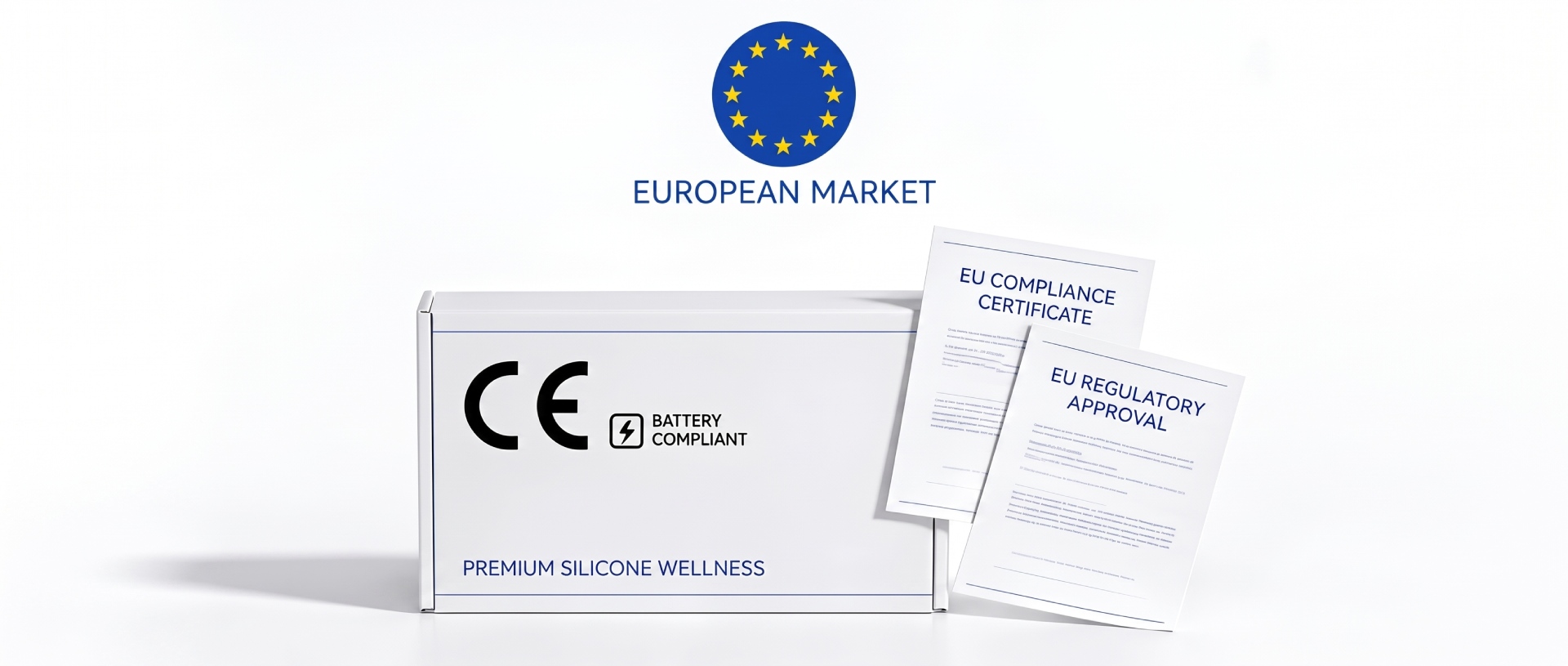
For brands, distributors and retailers selling sexual wellness products in Europe, compliance is becoming increasingly connected to product development itself.
The traditional approach — develop a product first and collect documents before shipment — is becoming less suitable for an increasingly regulated market.
Materials, batteries, electronics, labeling, traceability, packaging and connected functions may all introduce different regulatory considerations. For companies developing their 2027 product lines now, some of these questions should already be part of supplier discussions.
1. Product Safety and Traceability Are Becoming More Important
The EU General Product Safety Regulation (GPSR) has applied since December 13, 2024 and has strengthened the general product safety framework for consumer products in the European Union.
For B2B buyers, this reinforces the importance of clearly identifying the product and relevant economic operators, maintaining appropriate product information and ensuring that safety and traceability considerations are addressed throughout the supply chain.
Products offered through distance sales may require relevant manufacturer, responsible-person, product-identification and warning or safety information to be available to consumers. This means compliance should increasingly influence not only packaging, but also the product information supplied to distributors and online retailers.
2. Battery Design Deserves Earlier Attention
Rechargeable products represent a large share of modern sexual wellness devices. Battery capacity, charging performance and safety have traditionally been key sourcing considerations. For the European market, battery-related regulatory requirements are making the topic even more important.
Under the EU Batteries Regulation, requirements concerning the removability and replaceability of certain portable batteries are scheduled to apply from February 18, 2027. Applicability should be assessed according to the design, intended use and regulatory classification of the individual product.
For B2B buyers developing rechargeable products, battery architecture should therefore be discussed earlier in the development process. Important questions include:
- What type of battery is used?
- How is the battery integrated into the product?
- What battery documentation is available?
- What charging system is used?
- How is battery safety verified?
- What requirements apply in the destination market?
- Could upcoming regulations affect the current product architecture?
These discussions are easier and less expensive before tooling and mass production than after a product has already been finalized.
3. Connected Products Bring New Cybersecurity Considerations
Bluetooth, Wi-Fi and app-connected sexual wellness products continue to create new possibilities for remote interaction and personalized experiences. They also introduce a different category of risk.
The EU Cyber Resilience Act establishes cybersecurity requirements for products with digital elements. Certain reporting obligations begin to apply in 2026, while the Act's main obligations become applicable from December 11, 2027.
For connected sexual wellness products, this is particularly relevant because the product category can involve highly private user interactions. Future sourcing discussions for smart products may therefore need to go beyond hardware specifications.
B2B buyers may increasingly need to understand:
- How the product communicates with an app
- How software and firmware are maintained
- How vulnerabilities are handled
- What information the product or application processes
- How cybersecurity requirements are considered during development
- Who is responsible for software support throughout the relevant product lifecycle
A reliable motor and attractive industrial design are no longer enough for a truly smart product. Hardware, software and security increasingly need to be considered together.
4. Documentation Should Be Product-Specific
One of the most common questions in international sourcing is: "Do you have CE?" But this question alone may not provide enough information.
A simple non-electronic product and a rechargeable Bluetooth-connected product should not automatically be treated as having identical compliance requirements. A more useful sourcing question is: "Which regulatory and compliance requirements apply to this specific SKU, in this configuration, for our target market?"
That approach encourages buyers and suppliers to review compliance at product level rather than treating certificates as generic documents.
5. Compliance Should Begin During Product Development
For new OEM and ODM projects, some compliance issues can affect the physical design itself. Battery architecture may affect internal structure, required labeling may affect available space, electronic components can influence testing requirements, and material decisions can influence documentation and testing.
This is why compliance awareness should begin before final specifications are locked. For B2B buyers, bringing destination-market requirements into early supplier discussions can reduce the risk of redesign, retesting and delays later.
6. What Should Buyers Discuss With Suppliers?
When preparing a new sexual wellness product for the European market, consider discussing the following before mass production:
- Destination countries
- Product materials
- Electrical specifications
- Battery configuration
- Charging method
- Wireless or app functionality
- Required labeling
- Packaging information
- Traceability requirements
- Available test reports and documentation
- Additional testing required for the final configuration
For customized products, changes in components, materials or electronics should also be reviewed to determine whether existing documentation remains applicable.
From "Certificate Collection" to Compliance-Aware Development
The European market remains an important opportunity for sexual wellness brands, but regulatory expectations continue to evolve. The most effective response is not to wait until shipment and then search for documents. Instead, buyers and supply partners can integrate regulatory awareness into product selection and development from the beginning.
At FUNVEN, we believe successful international product development should balance: Product Innovation · User Experience · Quality · Compliance Awareness · Market Requirements.
For brands preparing their 2027 product pipeline, the right time to start these conversations is not 2027. It is during product development today.